
This month: “After Hours”, “Anvil!: The Story of Anvil!”, “Bad Neighbours 2”, “Beats, Rhymes and Life”, “Blended”, “Dave Chappelle’s Block Party”, “Embrace of the Serpent”, “Fire at Sea”, “Friday the 13th: Part III”, “Grave of the Fireflies”, “How to Be Single”, “Indignation”, “The Kingdom of Dreams and Madness”, “Lethal Weapon”, “Love & Friendship”, “Misery”, “Morris From America” (pictured above), “Offside”, “Pom Poko”, “Scratch”, “The Secret in Their Eyes”, “Starry Eyes”, “Two Night Stand”, “Waking Life”, “Warcraft: The Beginning” and “Wiener-Dog”.
Other things I’ve written include an interview with Whit Stillman on Love & Friendship, a feature on Ryan Gosling’s transition to comedy, an interview with Gianfranco Rosi on Fire at Sea, a feature on arthouse cinema’s take on football, an interview with Chad Hartigan on Morris from America, a feature on the films to watch when you can’t sleep, an interview with Marc Abraham on I Saw the Light, a feature on why Studio Ghibli will live forever, an interview with Todd Solondz on Wiener-Dog, a feature on the best music docs of the past 16 years, and an interview with Chris Kelly on Other People
Follow @halfacanyon for more.
After Hours (1985) – 8/10
Director: Martin Scorsese
Writer: Joseph Minion
Starring: Griffin Dunne, Rosanna Arquette, Verna Bloom, Linda Fiorentino, Catherine O’Hara
“The uglier the art, the more it’s worth”

Watched it again for a feature.
Anvil! The Story of Anvil (2008) – 7.5/10
Director: Sacha Gervasi
Starring: Anvil
“How much more can one person put their fucking love and dedication into something?”

Wrote about it here.
Bad Neighbours 2 (2016) – 6/10
Director: Nicholas Stoller
Writers: Andrew J. Cohen, Brenan O’Brien, Nicholas Stoller, Seth Rogen, Evan Goldberg
Starring: Seth Rogen, Rose Byrne, Chloë Grace Moretz, Zac Efron, Dave Franco
“Is it weird that I came?”
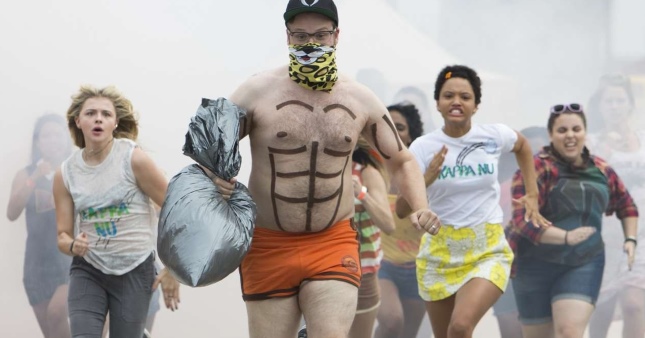
Bad Neighbours 2, when placed next-door to the 2014 original, is a smarter, less rowdy sequel, and by dropping in surprisingly progressive gender politics, it’s an improvement in the sense Evil Dead 2 redoes The Evil Dead. Rather than battling clueless bros (who have now grown up, to an extent), Rogen and Byrne’s adlibbing couple squabble with a sorority established as a protest – for some reason (sexism, duh), only frats can throw parties, and Moretz is fighting for her right to do just that.
The absence of a real enemy throws up some thoughtful complexity, as does a B-plot involving Efron and Franco’s friendship. (There’s another kind of throwing up, too.) But it’s a 90-minute comedy that deliberately sticks to the original’s formula. With five credited writers and a speedy turnaround, a mission of mediocrity is a gift of a second chance: a 4/10 movie evolves into a 6/10 sequel.
Beats, Rhymes & Life: The Travels of a Tribe Called Quest (2011) – 7.5/10
Director: Michael Rapaport
Starring: A Tribe Called Quest
“Stop throwing me under the bus in interviews.”

Wrote about it here.
Blended (2014) – 4/10
Director: Frank Coraci
Writers: Clare Sera, Ivan Menchell
Starring: Adam Sandler, Drew Barrymore, Shaquille O’Neal, Bella Thorne
“What did Africa do to you?”

Racist, sexist and homophobic, Blended is a potentially bland family romcom weighed down by Sandler-isms. Though it touches on grief, post-divorce romance and female empowerment, it’s also a strangely contrived story sending two families to “Africa” where the locals and animals are treated as a sideshow, while a teen girl is encouraged to stop being herself in order to attract a boy she’ll never see again.
When Barrymore decries to her BFF that she’s “found a great guy”, it’s staggering enough to demand an animal reaction shot – but that comes elsewhere. That said, there is a funny bit when Sandler believes his canoe is surrounded by crocodiles.
Dave Chappelle’s Block Party (2005) – 7.5/10
Director: Michel Gondry
Starring: Dave Chappelle, Mos Def, Kanye West, The Roots
“Every comic wants to be a musician. Every musician thinks they’re funny.”

I’m trying to think of the last time I threw a party. It’s hard. Sometimes I’m in public with my laptop listening to music, taking a while to realise my headphones aren’t plugged in. Dave Chappelle is a bit more generous, pouring his own money into a block party. It’s clearly a lot more fun than my party, but, considering the lack of conflict or political cause, does it work as a film?
Wrote about it here.
Embrace of the Serpent (2016) – 6/10
Director: Ciro Guerra
Writers: Ciro Guerra, Jacques Toulemonde Vidal
Starring: Jan Bijvoet, Nilbio Torres, Antonio Bolívar
“Look at your clothes. Same as the white man.”

There’s 20 minutes of magnificence swimming around in Guerra’s black-and-white dive into the Amazon. Twin stories, set decades apart, overlap on the same river, and it’s effectively time travel executed through nifty editing; the landscape merges into a dreamscape, and the climax is spectacular. All in all, it’s expertly done, but to be honest, I was bored for long stretches and it’s at least 40 minutes too long. I probably need to watch it again.
Fire at Sea (2016) – 8/10
Director: Gianfranco Rosi
“The mountains couldn’t hide us.”

Here’s my interview with Gianfranco Rosi.
Friday the 13th Part III (1982) – 3/10
Director: Steve Miner
Writers: Martin Kitrosser, Carol Watson
Starring: Dana Kimmell, Paul Kratkam Richard Brooker
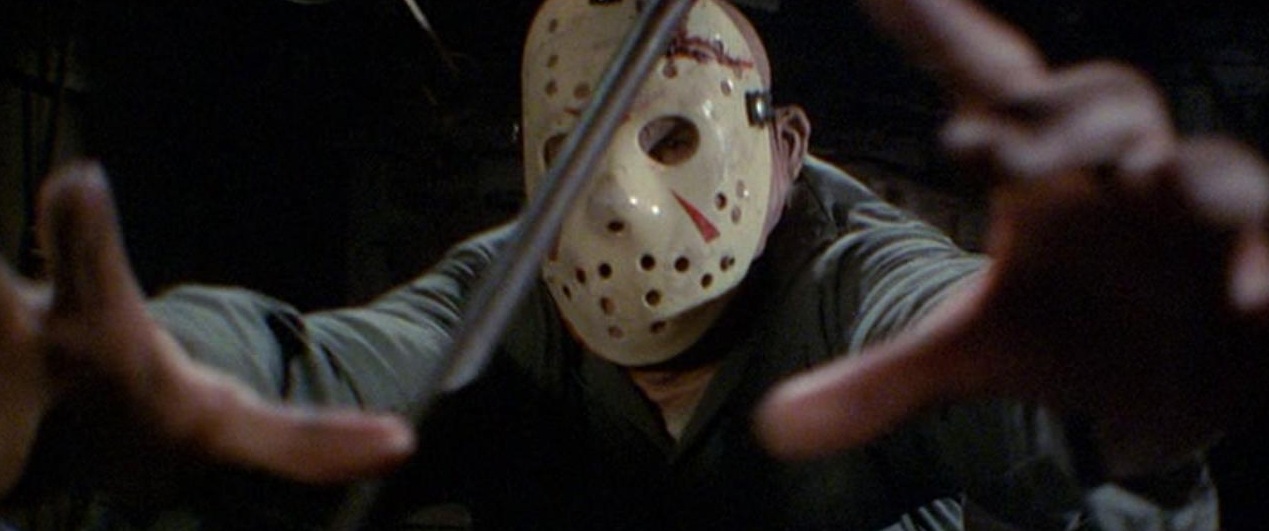
Supposedly the first instalment with a hockey mask and 3D elements, but even more tiresome than the first two. I guess that’s the way horror franchises work, though, so I guess I deserve to be one of Jason’s victims too.
Grave of the Fireflies (1988) – 8/10
Director: Isao Takahata
Writers: Isao Takahata, Akiyu Nosaka (novel)
Starring: Tsutomu Tatsumi, Ayano Shiraishi, Yoshiko Shinohara, Akemi Yamaguchi
“With the nightly raids and crying, how do you sleep?”

Entering the Studio Ghibli canon in the same year as My Neighbour Totoro, Takahata’s sombre war tale has deserved earned a rapturous following without – quite understandably – the cuddly cat toy merchandise. Grave of the Fireflies is the flipside to Totoro; two children can’t get over their mother’s death by running into a forest, because World War II is affecting the neighbourhoods as well. Instead of riding a cat bus, young Seita and his even young sister Setsuko slowly starve in a bomb shelter, finding solace in the few fireflies that survive the night.
The diligent hand-drawn animation makes every minor detail especially devastating: a tear rolling from the eye, to a maggot crawling from an abandoned carcass. Only animation can capture the cruel poetry of a charred city, brittle at its architecture, abandoning its malnutritioned children.
How to Be Single (2016) – 6/10
Director: Christian Ditter
Writers: Abby Kohn, Marc Silverstein, Dana Fox, Liz Tuccillo (book)
Starring: Dakota Johnson, Rebel Wilson, Leslie Mann, Damon Wayans Jr, Alison Brie
“I think we need to be exclusively seeing other people.”

The episodic structure of How to Be Single, a non-judgemental romcom adapted from an instructional bestseller, lends itself to four subplots of which only one is of real worth. Fortunately, that strand, belonging to Johnson, is the film’s focus, wringing genuine empathy for someone who rejects the genre’s typical quick-fix solutions (Wilson is a partyer from the Apatow school of unfunny riffing, Mann is a soppy wannabe mother from the Apatow school of conservative storytelling), while Brie’s comic set-pieces are so disconnected from proceedings, it’s unclear why she’s there. Perhaps Johnson’s character should really go it alone in terms of storytelling too.
Indignation – 8/10
Director: James Schamus
Writers: James Schamus, Philip Roth (novel)
Starring: Logan Lerman, Sarah Gadon, Tracy Letts
“Praying, to me, is preposterous.”

Logan Lerman is no longer living the perks of being wallpaper. In fact, the flimsiness of his past roles, whether in Stuck in Love or Fury, sets him up for Indignation as a boy who looks like a walkover, only for the reveal to be he’ll speak up for himself. At length, too.
At an Ohio college in 1951, Marcus (Lerman) is a Jewish student sent by his parents so he avoids the Korean War. Smart, curious and sharp-tongued, Marcus scores straight ‘A’s, but doesn’t settle in; his roommates are at loggerheads with his earnestness, and his atheism clashes with compulsory chapel sessions. All this leads to a 15-minute dialogue with the dean (Letts) which is the film’s centrepiece and masterstroke: the clash of two stubborn men who won’t give in. The scene subverts audience expectations by going on and on, and the film is worth checking out for this exchange alone.
This conflict sculpts the rest of Indignation, presenting Marcus as a progressive protester who won’t play dumb in conservative surroundings. His weakness, though, comes in the form of fellow student Olivia (Gadon), whose introduction is reminiscent of Rohmer’s Claire’s Knee. She blows him in a car on a first date, and from then on, he has the swirling thoughts of someone who at least thinks he’s in love. He’s not sure why she’s interested him, and wonders aloud, “Her parents are divorced.” It’s another side to the buoyant personality arguing with the dean.
That’s not to say Olivia is just a device. Really, she’s the film’s most interesting character with a background revealed incrementally through thoughtfully worded conversations and subtle visuals. Schamus may be a first-time director, but he’s an acclaimed screenwriter and producer who’s clearly taken notes from the best. Indignation is more intense from start to finish than the trailer suggests, and now we know he’s also an actor’s director.
The Kingdom of Dreams and Madness (2013) – 7/10
Director: Mami Sunada

A peek behind Studio Ghibli is always welcome, especially in this doc which spends a year with Miyazaki as he works on his swansong, The Wind Rises. Like the office cat that sleeps more than Garfield, the film is gentle, even meditative if you’re generous and throwing in pointless buzzwords, but it’s a true joy to watch a master animator at work. In the glimpses of Takahata, there’s a sense of the magic at the helm of Ghibli, which I wrote about here, FYI.
Lethal Weapon (1987) – 6/10
Director: Richard Donner
Writer: Shane Black
Starring: Mel Gibson, Danny Glover, Gary Busey
“I’m too old for this shit.”

A rarity for an action film that’d be more fun to read than watch. Hey, Shane Black, give me a ring – I’d love for you to reformat my blog sometime.
Love & Friendship (2016) – 8/10
Director: Whit Stillman
Writers: Whit Stillman, Jane Austen (novel)
Starring: Kate Beckinsale, Emma Greenwell, Xavier Samuel, Tom Bennett, Chloë Sevigny
“My daughter has shown herself to be cunning and manipulative. I couldn’t be more proud.”

There’s a revelation in Metropolitan than Tom, a keen debater of Austen’s work, has never read any of Austen’s novels, and that he instead flicks through literary criticism. “That way you get both the novelist’s ideas as well as the critic’s thinking,” he explains, dubiously. That said, Love & Friendship is what could fittingly be described as a marriage of Austen’s and Stillman’s (sense and) sensibilities in 90 minutes.
Here’s my interview with Whit Stillman.
Misery (1990) – 6/10
Director: Rob Reiner
Writers: William Goldman, Stephen King (novel)
Starring: James Caan, Kathy Bates
“I’m gonna put on my Liberace records.”

Journalism in the 21st century: both characters would be bloggers.
Morris From America – 7.5/10
Director/Writer: Chad Hartigan
Starring: Markees Christmas, Craig Robinson, Lina Keller, Carla Juri
“I had sick flow with that freestyle shit. Probably still do.”
Here’s my interview with Chad Hartigan.
Offside (2006) – 8/10
Director: Jafar Panahi
Writers: Jafar Panahi, Shadmehr Rastin
Starring: Shima Mobarak-Shahi, Safar Samandar, Shayesteh Irani, Ayda Sadeqi, Golnaz Farmani
“We promise not to listen.”

Wrote about it here.
Pom Poko (1994) – 7.5/10
Director/Writer: Isao Takahata
Starring: Kokontei Shinchou, Yuriko Ishida
“I have no face!”
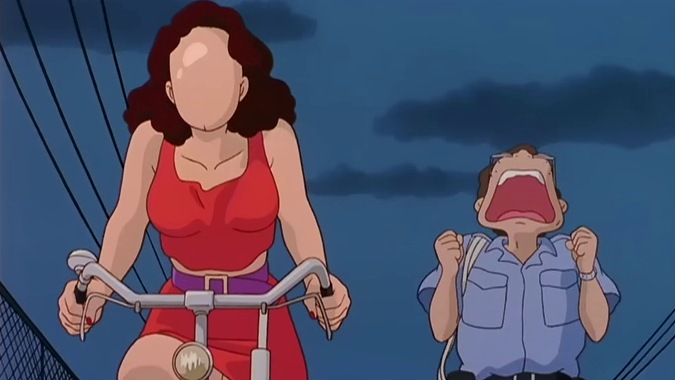
I’m still trying to work out of if Takahata’s transforming racoon fable is an LSD-inspired work of genius, or an illogical children’s cartoon that’s won me over because of who’s involved. That said, Pom Poko is probably the most idiosyncratic of the Studio Ghibli canon, while sticking closely to the freewheeling, nature-loving mantra of its tentpole releases. But, on the strength of the (accidental?) Eyes Without a Face tribute, I’ll give it two thumbs up. (Because I’ve transformed into Siskel and Ebert.)
Scratch (2001) – 7.5/10
Director: Doug Pray
“They say if you practise for one year, give up women, wine, everything… they say you’ll be the best.”

Wrote about it here.
The Secret in Their Eyes (2009) – 5/10
Original title: El secreto de sus ojos
Director: Juan José Campanella
Writers: Juan José Campanella, Eduardo Sacheri
Starring: Ricardo Darín, Soledad Villamil, Pablo Rago, Javier Godino, Guillermo Francella

An unremarkable movie except for a twist everyone knows about and a killer five-minute tracking shot.
Starry Eyes (2014) – 3.5/10
Directors/Writers: Kevin Kölsch, Dennis Widmyer
Starring: Alex Essoe, Amanda Fuller, Noah Segan
“Words, Sarah. Just words. What would you do to convince me?”

Starry Eyes sits somewhere between Birdman and Maps to the Stars in terms of winking Hollywood satires that want a pat on the back for pointing out its own superficiality. Enough already. The horror aspect of Starry Eyes takes place in the murky audition process, whereby Essoe is pressured into sleeping with an old white dude for a role; she abides, goes crazy, and the same point is repeated to death. Disappointing, outside of some effective mood lighting.
Two Night Stand (2014) – 4/10
Director: Max Nichols
Writer: Mark Hammer
Starring: Miles Teller, Analeigh Tipton, Jessica Szohr
“Everything makes sense to me. It’s the burden of being a genius.”

An affable romcom with the guy from Whiplash and not the girl from Whiplash. I chose to watch it as an alternate Whiplash, if Teller had stuck with the relationship (and rushed through it), because ultimately does not (two night) stand out.
A drunken hook-up, administrated by an internet algorithm, traps two arguing youngsters inside a flat because of a snow storm. The actors’ likeability outshines a weak script that makes a point of equating its characters with a magazine article left blocking the toilet. It’s rather dull and missing a hyphen in the title.
Waking Life (2001) – 8.5/10
Director/Writer: Richard Linklater
Starring: Wiley Wiggins, Adam Goldberg, Steven Soderbergh, Ethan Hawke, Julie Delpy
“I’m going to tell you about a dream I once had. I know that usually when someone says that, usually you’re in for a very boring few minutes – and you might be – but it sounds like, what else are you gonna do, right?”

Wrote about it here.
Warcraft: The Beginning (2016) – 2.5/10
Director: Duncan Jones
Writers: Charles Leavitt, Duncan Jones, Chris Metzen (story)
Starring: Travis Fimmel, Paula Patton, Ben Foster, Dominic Cooper, Toby Kebbell
“Gul’dan must be stopped!”

With a subtitle doubling as a threat, Warcraft: The Beginning is a movie that not only discourages me from ever picking up the game, it’s forcing me to be pickier about what I see at the cinema. The jokiness and lack of peril in Captain America: Civil War convinced me I’d prefer an earnest take on fantasy – but I’d give so much for Durotan to be played by Paul Rudd, even if the dialogue is just the same nonsensical jargon. I had no idea what was going on in Warcraft, and in part, it’s my fault; my brain was actively fighting it off, like when someone spoils a film or TV series you’re yet to catch up on. Guldan must be stopped. And so must the rest – especially as it seems to be heading in the direction of Son of Mask.
Wiener-Dog – 7.5/10
Director/Writer: Todd Solondz
Starring: Greta Gerwig, Kieran Culkin, Julie Delpy, Zosia Mamet, Danny DeVito, Ellen Burstyn
“It’s so sad and lonely and depressing in America. Like a big fat elephant drowning in a sea of despair.”

A dog movie where the pet obsession is death. Here’s my interview with Todd Solondz.
Follow @halfacanyon for more. Unfollow @halfacanyon for less.


Pingback: Kenicky’s 2016 film roundup | HALF A CANYON FILM BLOG: A traffic jam when you're already a plate